

الإربعاء: 6 مايو 2026م
The National Committee for Drafting the National Anti-Trafficking in Persons Law Concludes the Initial
Draft of the Legislation
Wednesday, May 6, 2026
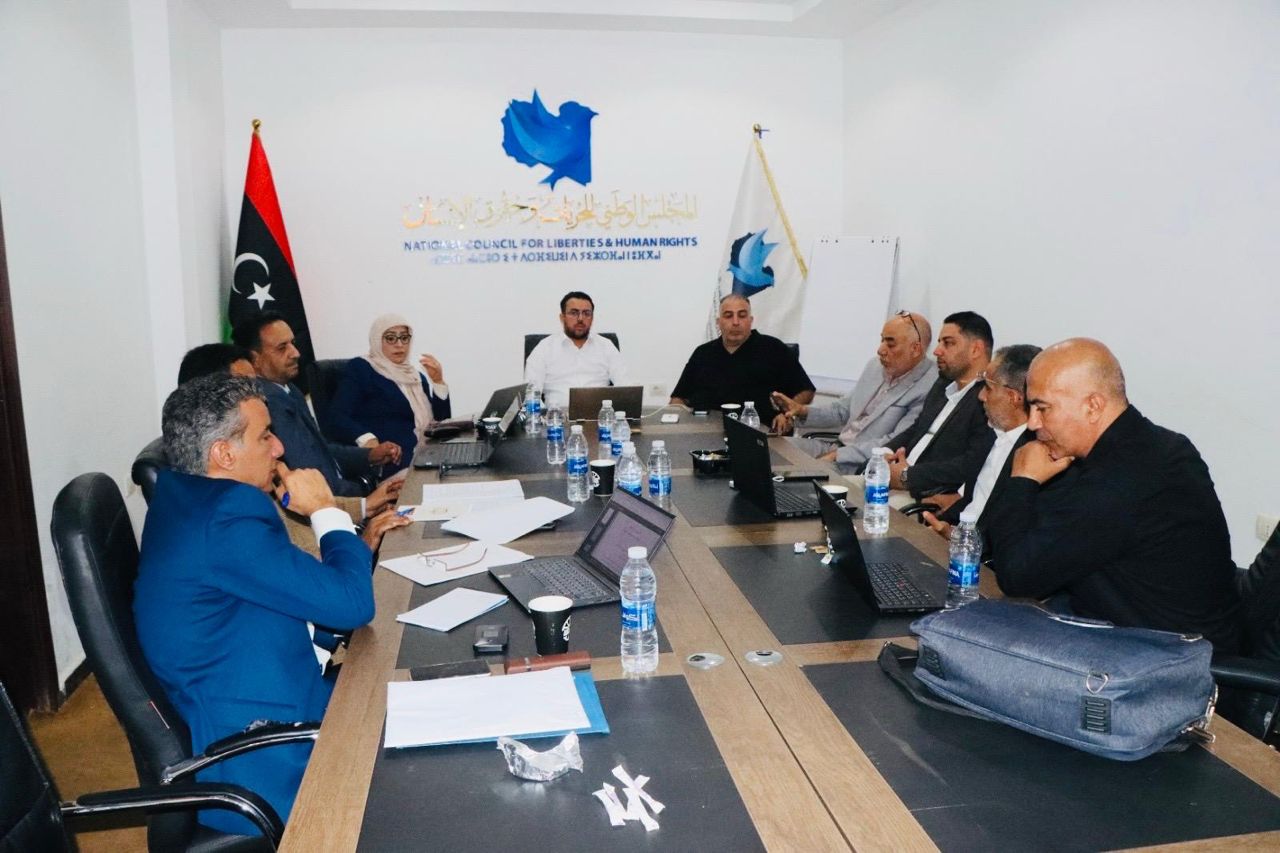
ترأس الأستاذ عبدالمولي أبونتيشة، المكلف بتسيير أعمال المجلس الوطني للحريات وحقوق الإنسان، بصفته رئيساً للجنة اجتماع اللجنة الوطنية المعنية بإعداد مشروع قانون وطني لمكافحة جريمة الاتجار بالبشر، وذلك ظهر اليوم الأربعاء بديوان المجلس، في إطار استكمال الجهود المؤسسية الرامية إلى تطوير المنظومة التشريعية الوطنية وتعزيز قدرة الدولة الليبية على التصدي لهذه الجريمة وفق المعايير الدولية لحقوق الإنسان ومكافحة الجريمة المنظمة عبر الوطنية.
وشهد الاجتماع مشاركة واسعة لأعضاء اللجنة من الجهات القضائية والأمنية والحقوقية، من بينها ممثلون عن المجلس الأعلى للقضاء، ومكتب النائب العام، ووزارة الداخلية، ووزارة العدل، إضافة إلى اللجنة الوطنية الفنية لمتابعة الهجرة وأمن الحدود، والمركز الليبي للدراسات الاستراتيجية والأمن الوطني، إلى جانب ممثلين عن عدد من الجهات المختصة.
واستعرضت اللجنة خلال الاجتماع مسودة مشروع القانون، حيث تم التوافق على صيغة تشريعية وطنية موحّدة تعبّر عن الإرادة المشتركة للسلطات التشريعية والقضائية والتنفيذية، وبذلك تكون اللجنة قد أنجزت المسودة الأولية للقانون المتضمنة أحكاماً واضحة ومحددة لتجريم الاتجار بالبشر ومكافحته ، وقد استندت اللجنة في عملها إلى الواقع الوطني والاتفاقيات الدولية ذات الصلة، بما يحقق التوازن بين مقتضيات السيادة الوطنية والالتزامات الدولية للدولة، ويؤسس لنهج تشريعي يرتكز على محاور الوقاية والحماية والمكافحة والمساءلة وعدم الإفلات من العقاب.
كما ناقش الاجتماع الخطوات المقبلة لعمل اللجنة، والتي تشمل عرض مسودة القانون على مجلس النواب ، و تنظيم ورش عمل تشاورية وتوعوية حول مشروع القانون، بما يعزز المشاركة المؤسسية والمجتمعية في تطويره قبل استكمال مراحله التشريعية.
وأكد المجلس أن عمل اللجنة، الذي امتد لأكثر من عامين عبر مراحل متعددة، استوعب مختلف الجهود الوطنية السابقة، ويجسد التزام الدولة الليبية بتعزيز التعاون الثنائي والإقليمي والدولي في مكافحة الاتجار بالبشر، وترسيخ مقومات الأمن الإنساني والاستقرار، وفق مقاربة وطنية قائمة على الشراكة المؤسسية واحترام حقوق الإنسان.
Mr. Abdulmoli Abunatisha, Acting Head of the National Council for Civil Liberties and Human Rights, in his capacity as Chair of the Committee, presided over a meeting of the National Committee tasked with drafting a national law to combat the crime of trafficking in persons. The meeting was held on Wednesday afternoon at the Council’s headquarters, as part of ongoing institutional efforts to develop the national legislative framework and strengthen the Libyan state’s capacity to address this crime in line with international human rights standards and the framework for combating transnational organized crime.
The meeting witnessed broad participation from committee members representing judicial, security, and human rights bodies, including representatives from the Supreme Judicial Council, the Office of the Attorney General, the Ministry of Interior, and the Ministry of Justice, in addition to the National Technical Committee for Migration and Border Security, the Libyan Center for Strategic and National Security Studies, as well as representatives from several other relevant entities.
During the meeting, the Committee reviewed the draft law and reached consensus on a unified national legislative formulation that reflects the collective will of the legislative, judicial, and executive authorities. The Committee has thus completed the initial draft of the law, which includes clear and specific provisions criminalizing trafficking in persons and addressing its prevention and suppression. The draft is grounded in the national context and relevant international conventions, ensuring a balance between national sovereignty and the State’s international obligations. It establishes a legislative approach based on the pillars of prevention, protection, prosecution, accountability, and the fight against impunity.
The meeting also discussed the Committee’s next steps, including submitting the draft law to the House of Representatives and organizing consultative and awareness-raising workshops on the draft to enhance institutional and community participation before completing the legislative process.
The Council affirmed that the Committee’s work, which has spanned more than two years across multiple phases, has incorporated various previous national efforts. It reflects Libya’s commitment to strengthening bilateral, regional, and international cooperation in combating trafficking in persons, and to reinforcing the foundations of human security and stability, through a national approach based on institutional partnership and respect for human rights.
