

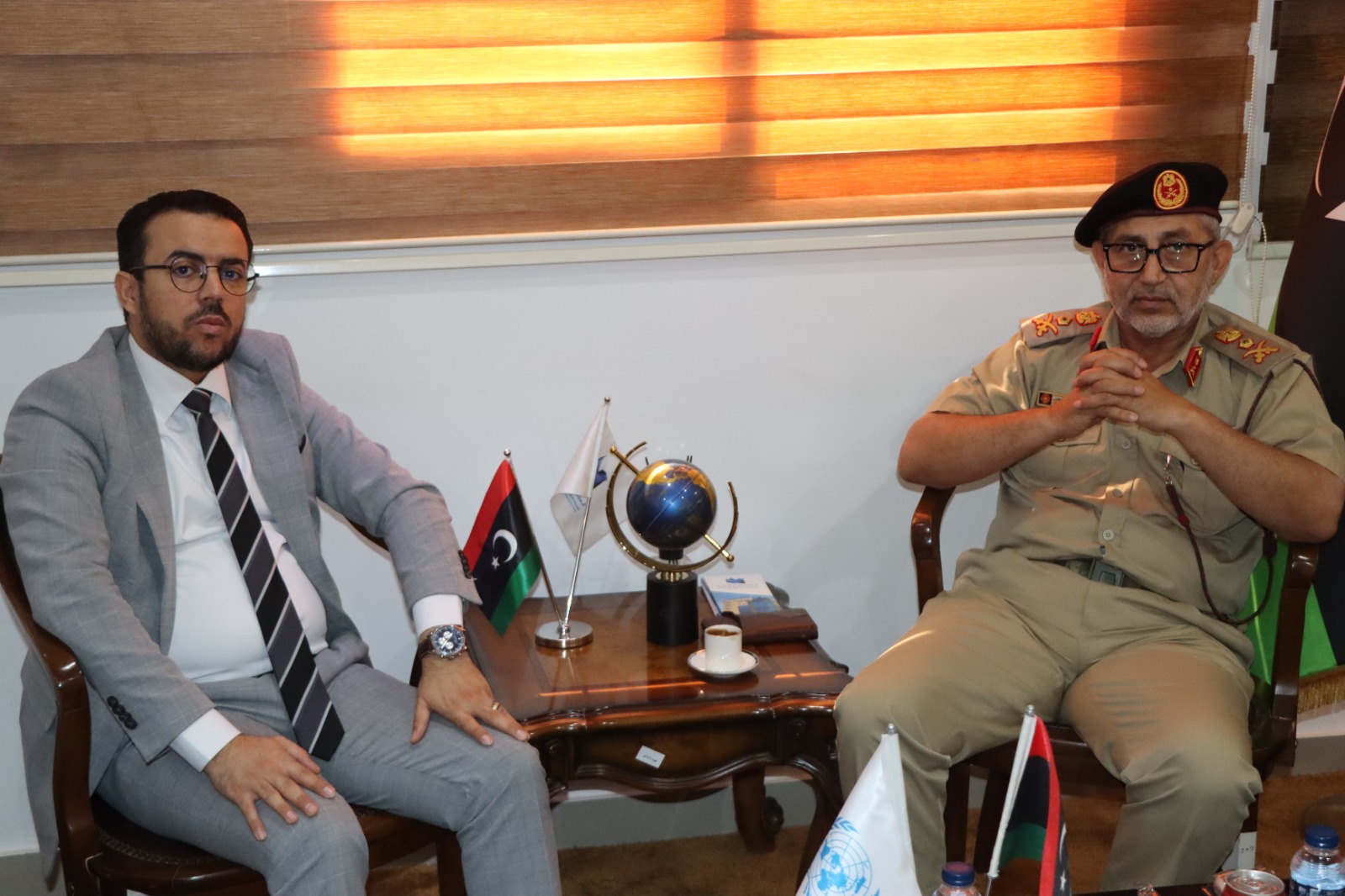
National Council for Public Liberties and Human Rights Receives Head of Security Arrangements Committee
طرابلس : 24 سبتمبر 2026
بحث رئيس المجلس الوطني للحريات وحقوق الإنسان المكلف ، الأستاذ عبدالمولى أبونتيشة، اليوم الخميس، مع الفريق مصطفى يحيى، رئيس لجنة الترتيبات الأمنية بالمنطقة الغربية وعضو لجنة 5+5، جملة من القضايا ذات الصلة بالأمن وحقوق الإنسان، وذلك خلال اللقاء الذي عُقد بمقر المجلس في العاصمة طرابلس.
وتناول اللقاء الجهود المبذولة لتعزيز الأمن والاستقرار داخل المناطق الواقعة ضمن نطاق عمل الغرفة والقوة المشتركة، ودور الأجهزة والجهات المكلفة بإنفاذ القانون في حماية الأرواح، وصون الحق في الحياة والسلامة الشخصية، وحماية المدنيين وممتلكاتهم، والحد من الجريمة ومظاهر الانفلات الأمني، بما يكفل ممارسة المواطنين لحقوقهم وحرياتهم في بيئة آمنة ومستقرة.
وأكد رئيس المجلس أن الأمن وحقوق الإنسان يمثلان مسارين متكاملين، وأن إنفاذ القانون وحماية النظام العام يجب أن يجريا في إطار سيادة القانون والالتزام بالضمانات القانونية والحقوقية، وبما يحفظ كرامة الإنسان ويصون الحقوق والحريات العامة، ويضمن عدم المساس بالحقوق إلا في الحدود التي يجيزها القانون ووفقاً للمعايير الوطنية والدولية ذات الصلة.
وأشاد رئيس المجلس بالجهود التي تبذلها الغرفة الأمنية والقوة المشتركة في أداء مهامها، ولا سيما ما يتصل بحماية المواطنين وممتلكاتهم ومواجهة الجريمة وتعزيز الأمن داخل نطاق الاختصاص، مؤكداً أهمية مواصلة تطوير الأداء الأمني بما يعزز فاعلية إنفاذ القانون ويضمن حماية الأرواح والممتلكات، ويحافظ في الوقت ذاته على الحقوق والحريات الأساسية.
كما استعرض المجلس نتائج أعمال الرصد والمتابعة التي يضطلع بها، والتي أظهرت انخفاضاً ملحوظاً في عدد من الوقائع والحالات المرصودة خلال شهر سبتمبر مقارنة بالفترات السابقة، مع التأكيد على أهمية مواصلة الرصد الحقوقي المستقل والموضوعي، والاستفادة من نتائجه في دعم الإجراءات التي من شأنها تعزيز حماية المدنيين والوقاية من الانتهاكات وتحسين الاستجابة المؤسسية لها.
وشدد رئيس المجلس على أن استدامة الأمن والاستقرار تتطلب تكامل الأدوار بين المؤسسات الأمنية والرقابية والحقوقية، وتعزيز قنوات التواصل والتنسيق المؤسسي، بما يسهم في ترسيخ سيادة القانون، وتعزيز المساءلة، والوقاية من الانتهاكات، وحماية الحقوق والحريات، وبناء الثقة بين مؤسسات إنفاذ القانون والمجتمع.
من جانبه، أكد رئيس لجنة الترتيبات الأمنية الفريق مصطفى يحيى أهمية استمرار التعاون والتنسيق مع المجلس الوطني للحريات وحقوق الإنسان، والاستفادة من الملاحظات والتوصيات والمقاربة الحقوقية التي يقدمها المجلس، بما يسهم في تطوير الأداء الأمني، وتعزيز الالتزام بالقانون والمعايير الحقوقية، وترسيخ الثقة بين المؤسسات الأمنية والمواطنين.
واتفق الجانبان على مواصلة التواصل والتنسيق وتبادل الخبرات والملاحظات ذات الصلة، بما يدعم جهود حماية الحق في الحياة والسلامة الشخصية، وصون أمن المدنيين وممتلكاتهم، وتعزيز سيادة القانون وإنفاذه، وترسيخ احترام حقوق الإنسان والحريات العامة، وبما يسهم في دعم بناء مؤسسات أمنية فاعلة ومسؤولة تعمل في إطار القانون والمعايير الوطنية والدولية لحقوق الإنسان.
National Council for Public Liberties and Human Rights Receives Head of Security Arrangements Committee
Tripoli – 24 September 2026
The President of the National Council for Public Liberties and Human Rights, Mr. Abdelmoula Ramadan Antisha, met today, Thursday, with Lieutenant General Mustafa Yahya, Head of the Security Arrangements Committee in the Western Region and a member of the 5+5 Joint Military Commission, to discuss a number of issues related to security and human rights. The meeting was held at the Council’s headquarters in Tripoli.
The meeting addressed efforts to strengthen security and stability in areas falling within the operational scope of the security chamber and joint force, as well as the role of law enforcement agencies and bodies in protecting lives, safeguarding the right to life and personal security, protecting civilians and their property, combating crime and addressing manifestations of insecurity, thereby enabling citizens to exercise their rights and freedoms in a safe and stable environment.
The President of the Council emphasized that security and human rights are complementary and mutually reinforcing. He stressed that law enforcement and the maintenance of public order must be carried out within the framework of the rule of law and in compliance with legal and human rights safeguards, while preserving human dignity and protecting fundamental rights and public freedoms. He further underscored that any restriction of rights must remain within the limits permitted by law and in accordance with relevant national and international standards.
The President commended the efforts undertaken by the security chamber and the joint force in carrying out their duties, particularly with regard to protecting citizens and their property, combating crime, and strengthening security within their area of responsibility. He stressed the importance of continuing to develop security performance in a manner that enhances the effectiveness of law enforcement and ensures the protection of lives and property, while safeguarding fundamental rights and freedoms.
The Council also presented the findings of its monitoring and follow-up activities, which indicated a notable decrease in the number of incidents and cases documented during September compared with previous periods. The Council emphasized the importance of continuing independent and objective human rights monitoring and making use of its findings to support measures aimed at strengthening the protection of civilians, preventing violations, and improving institutional responses to them.
The Council President stressed that sustainable security and stability require coordinated roles among security, oversight, and human rights institutions, as well as stronger channels of institutional communication and coordination. Such cooperation, he noted, contributes to strengthening the rule of law, accountability, and the prevention of violations, while protecting rights and freedoms, building public confidence in law enforcement institutions, and strengthening trust between institutions and the community.
For his part, Lieutenant General Mustafa Yahya, Head of the Security Arrangements Committee, affirmed the importance of maintaining cooperation and coordination with the National Council for Public Liberties and Human Rights and benefiting from the observations, recommendations, and human rights-based approach provided by the Council. He noted that such cooperation contributes to improving security performance, strengthening compliance with the law and human rights standards, and fostering greater trust between security institutions and citizens.
The two sides agreed to continue communication and coordination and to exchange relevant expertise and observations in support of efforts to protect the right to life and personal security, safeguard the security of civilians and their property, strengthen the rule of law and its enforcement, and promote respect for human rights and public freedoms. They further emphasized that such cooperation contributes to building effective and accountable security institutions operating in accordance with the law and national and international human rights standards.
