

الأربعاء؛ 1 يوليو 2026
UNSMIL Human Rights, Rule of Law and Transitional Justice Official Visits the National Council for Public Liberties and Human Rights
Wednesday, 1 July 2026
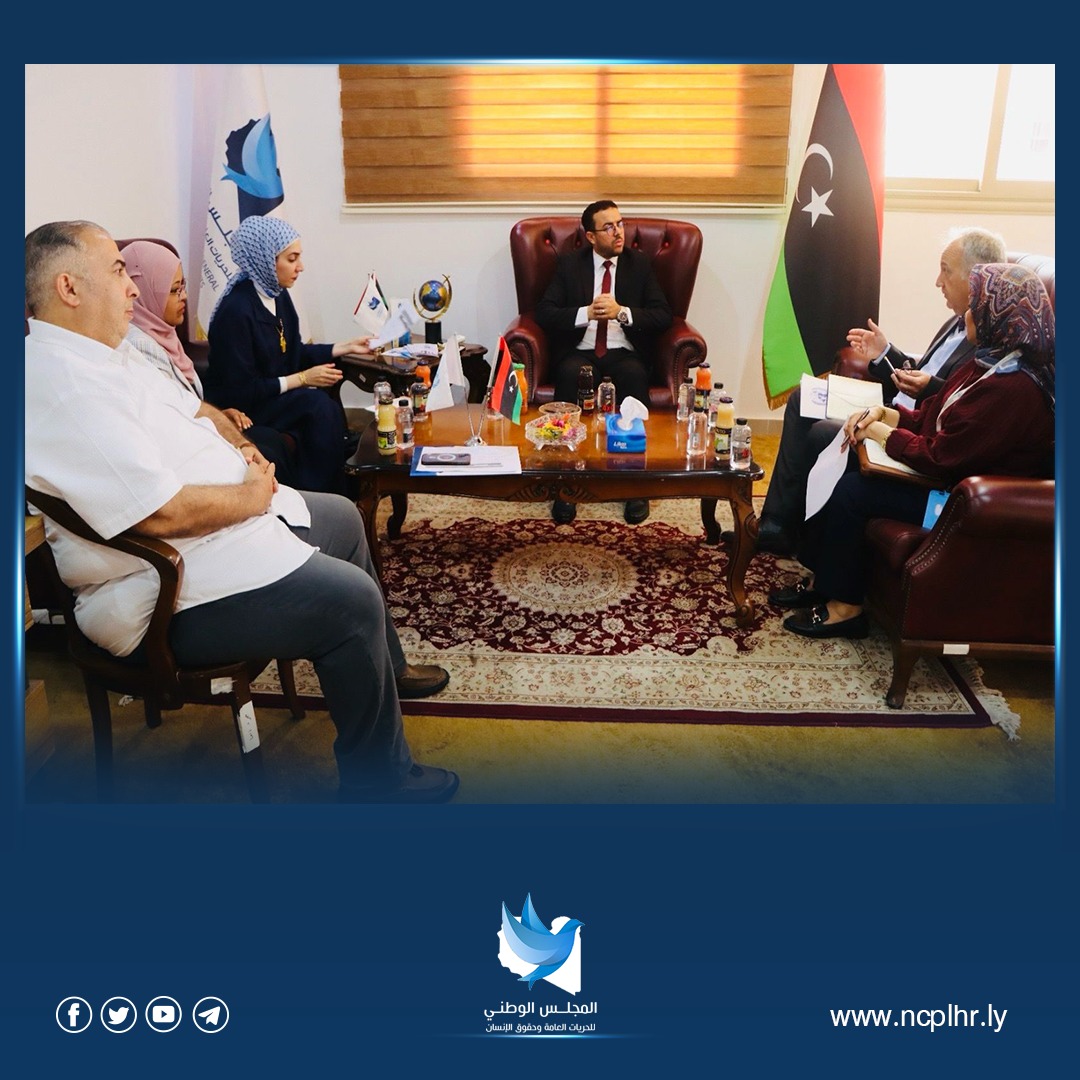
استقبل المجلس الوطني للحريات وحقوق الإنسان، ظهر اليوم الأربعاء، بمقره في العاصمة طرابلس، السيد ماركو كولبوش، مسؤول حقوق الإنسان وسيادة القانون والعدالة الأنتقالية ببعثة الأمم المتحدة للدعم في ليبيا، يرافقه السيدة مريم جعفر، مسؤولة حقوق الإنسان بالبعثة، وذلك في إطار تعزيز التعاون المؤسسي والتنسيق المشترك في مجالات حماية وتعزيز حقوق الإنسان، ودعم سيادة القانون، وبحث أولويات العمل الحقوقي في ليبيا.
وعقد الوفد اجتماعًا مع رئيس المجلس الوطني للحريات وحقوق الإنسان، الأستاذ عبدالمولى أبونتيشة، بحضور مدير إدارة التعاون الدولي، الأستاذ سالم الطيب، ومدير إدارة الشكاوى ورصد الانتهاكات، الأستاذة فاطمة عمر حواص.
وتناول الاجتماع ولاية المجلس واختصاصاته بوصفه المؤسسة الوطنية المعنية بتعزيز وحماية حقوق الإنسان، وآليات اضطلاعه بمهامه في مجالات الرصد والتوثيق، واستقبال الشكاوى، ورصد أوضاع حقوق الإنسان، إلى جانب دوره في إعداد التقارير الوطنية وإصدار التوصيات ومتابعة تنفيذها، بما يسهم في تعزيز احترام حقوق الإنسان وترسيخ مبادئ سيادة القانون.
وقدمت رئاسة المجلس عرضًا شاملًا حول أولوياته الاستراتيجية وبرامج عمله، مستعرضةً منهجية المجلس في توثيق انتهاكات حقوق الإنسان وفق المعايير المهنية المعتمدة، وآليات معالجة الشكاوى، والإجراءات المتبعة في الرصد والتحقق وإعداد التقارير الموضوعية المستندة إلى الأدلة، بما يعزز المساءلة ويخدم جهود حماية الحقوق والحريات الأساسية بليبيا .
كما استعرض المجلس جهوده في دعم تطوير المنظومة التشريعية الوطنية بما يعزز مواءمتها مع الاتفاقيات الدولية لحقوق الإنسان والتزامات الدولة الليبية، مستعرضًا عددًا من المبادرات التشريعية التي يعمل عليها، وفي مقدمتها مشروع قانون حماية البيانات الشخصية ، ومشروع قانون مكافحة الاتجار بالأشخاص، ومشروع قانون حقوق الأشخاص ذوي الإعاقة، باعتبارها تشريعات تسهم في تعزيز حماية الحقوق والحريات الأساسية وترسيخ الضمانات القانونية للفئات المستحقة للحماية.
وتناول الاجتماع كذلك المؤشرات والبيانات التي رصدها المجلس بشأن حالات الحرمان التعسفي من الحق في الحياة والقتل خارج نطاق القانون خلال النصف الأول من عام 2026، حيث قدم المجلس عرضًا لأبرز النتائج التي توصل إليها من خلال أعمال الرصد والتوثيق، مؤكدًا ضرورة إجراء تحقيقات مستقلة وفعالة، وضمان المساءلة وعدم الإفلات من العقاب، بما يتوافق مع الالتزامات القانونية الوطنية والمعايير الدولية لحقوق الإنسان.
كما استعرض المجلس نتائج زياراته الميدانية إلى مؤسسات الإصلاح والتأهيل، وما تضمنته تقاريره من ملاحظات وتوصيات تتعلق بتحسين أوضاع الاحتجاز وضمان معاملة الأشخاص المحرومين من حريتهم بما يتوافق مع المعايير الدولية، وبما يحفظ كرامتهم الإنسانية ويكفل احترام حقوقهم الأساسية.
وفي السياق ذاته، ناقش الاجتماع نتائج الزيارات الميدانية التي أجراها المجلس إلى مراكز إيواء المهاجرين، وما خلصت إليه من ملاحظات وتوصيات بشأن أوضاع المهاجرين، مع التأكيد على أهمية احترام حقوقهم الإنسانية، وتعزيز التدابير الكفيلة بحمايتهم، وضمان المعاملة الإنسانية دون تمييز، انسجامًا مع المعايير الدولية ذات الصلة.
كما استعرض المجلس علاقاته مع الشركاء الدوليين، والبرامج والمشروعات التي ينفذها بدعم فني وتقني في مجالات بناء القدرات والتطوير المؤسسي، إلى جانب عرض أبرز أولوياته واحتياجاته المؤسسية، وفي مقدمتها تعزيز القدرات الفنية والمؤسسية، وتطوير نظم الرصد والتوثيق وإدارة الشكاوى، ودعم إعداد الدراسات والتقارير، بما يمكن المجلس من الاضطلاع بولايته الوطنية بكفاءة واستقلالية وفاعلية.
من جانبه، أشاد وفد بعثة الأمم المتحدة للدعم في ليبيا بالدور الذي يضطلع به المجلس في تعزيز وحماية حقوق الإنسان، مؤكدًا أهمية استمرار التعاون والتنسيق مع المؤسسة الوطنية لحقوق الإنسان، ودعم جهودها الرامية إلى تعزيز سيادة القانون، وترسيخ مبادئ المساءلة، والوفاء بالتزامات ليبيا الدولية في مجال حقوق الإنسان.
واختُتم اللقاء بالتأكيد على أهمية مواصلة الحوار والتعاون بين المجلس الوطني للحريات العامة وحقوق الإنسان وبعثة الأمم المتحدة للدعم في ليبيا، بما يسهم في دعم الجهود الوطنية الرامية إلى تعزيز منظومة حقوق الإنسان، وترسيخ مبادئ سيادة القانون، وبناء مؤسسات وطنية أكثر قدرة على حماية الحقوق والحريات وتعزيز احترامها وفقًا للمعايير الدولية.
UNSMIL Human Rights, Rule of Law and Transitional Justice Official Visits the National Council for Public Liberties and Human Rights
Wednesday, 1 July 2026
The National Council for Public Liberties and Human Rights received, on Wednesday afternoon at its headquarters in Tripoli, Mr. Marco Kolbush, Human Rights, Rule of Law and Transitional Justice Officer at the United Nations Support Mission in Libya (UNSMIL), accompanied by Ms. Mariam Jaafar, Human Rights Officer at the Mission. The visit took place within the framework of strengthening institutional cooperation and joint coordination in the fields of the promotion and protection of human rights, support for the rule of law, and the discussion of key human rights priorities in Libya.
The UNSMIL delegation held a meeting with the President of the National Council for Public Liberties and Human Rights, Mr. Abdulmawla Abunteisha, in the presence of Mr. Salem Al-Tayeb, Director of the International Cooperation Department, and Ms. Fatima Omar Hawwas, Director of the Complaints and Violations Monitoring Department.
The meeting addressed the Council’s mandate and competencies as Libya’s national institution responsible for the promotion and protection of human rights, as well as the mechanisms through which it carries out its functions in monitoring and documenting human rights violations, receiving and processing complaints, assessing the human rights situation, preparing national reports, issuing recommendations, and following up on their implementation, thereby contributing to the promotion of respect for human rights and the strengthening of the rule of law.
The Council’s Presidency delivered a comprehensive presentation outlining its strategic priorities and programmes of work, highlighting the Council’s methodology for documenting human rights violations in accordance with internationally recognized professional standards. The presentation also covered the Council’s complaints-handling mechanisms and its procedures for monitoring, verification, and the preparation of objective, evidence-based reports aimed at strengthening accountability and advancing the protection of fundamental rights and freedoms in Libya.
The Council further presented its efforts to support the development of Libya’s national legislative framework in line with international human rights treaties and the State’s international obligations. It highlighted a number of legislative initiatives currently under development, including a Draft Personal Data Protection Law, a Draft Anti-Trafficking in Persons Law, and a Draft Law on the Rights of Persons with Disabilities, all of which are intended to strengthen the protection of fundamental rights and freedoms and reinforce legal safeguards for groups requiring special protection.
The meeting also reviewed the Council’s findings and data concerning cases of arbitrary deprivation of the right to life and extrajudicial killings documented during the first half of 2026. The Council presented its principal findings based on its monitoring and documentation activities, emphasizing the necessity of conducting prompt, independent, and effective investigations, ensuring accountability, and combating impunity in accordance with Libya’s national legal obligations and international human rights standards.
In addition, the Council presented the outcomes of its field visits to correctional and rehabilitation institutions, together with the observations and recommendations contained in its reports regarding the improvement of detention conditions and the need to ensure that persons deprived of their liberty are treated in accordance with international standards, in a manner that preserves their human dignity and guarantees respect for their fundamental rights.
The meeting also addressed the findings of the Council’s field visits to migrant accommodation and detention centres, including the observations and recommendations concerning the situation of migrants. Particular emphasis was placed on the importance of safeguarding their human rights, strengthening protection measures, and ensuring humane treatment without discrimination, in line with applicable international standards.
Furthermore, the Council reviewed its cooperation with international partners and the programmes and projects implemented with technical and institutional support in the areas of capacity-building and institutional development. It also outlined its key institutional priorities and needs, including strengthening technical and institutional capacities, enhancing monitoring, documentation and complaints management systems, and supporting the preparation of studies and reports, thereby enabling the Council to effectively, independently, and efficiently fulfil its national mandate.
For its part, the UNSMIL delegation commended the Council’s important role in promoting and protecting human rights and underscored the importance of maintaining close cooperation and coordination with Libya’s National Human Rights Institution. The delegation reaffirmed its support for the Council’s efforts to strengthen the rule of law, promote accountability, and assist Libya in fulfilling its international human rights obligations.
The meeting concluded with both sides reaffirming the importance of continuing dialogue and cooperation between the National Council for Public Liberties and Human Rights and the United Nations Support Mission in Libya. Such cooperation will contribute to supporting national efforts aimed at strengthening the human rights framework, consolidating the rule of law, and building stronger national institutions capable of protecting and promoting human rights and fundamental freedoms in accordance with international standards.
